
Shopping Cart
No item in your cart!
RM0.00

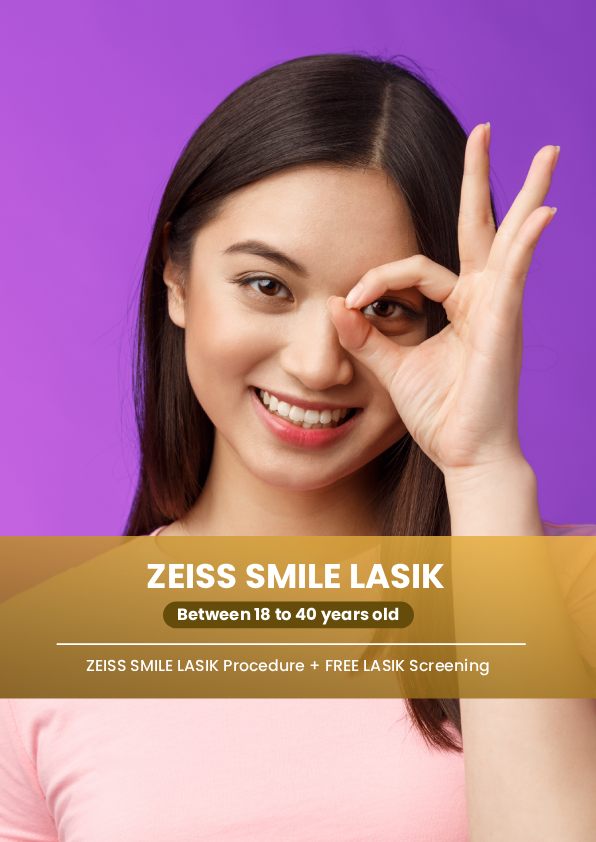
Advanced Laser Vision Correction with Minimal Downtime
ZEISS SMILE is a next-generation laser vision correction procedure designed to reduce dependence on glasses and contact lenses through a precise and minimally invasive approach. It offers quick recovery, minimal discomfort, and reliable visual outcomes — making it ideal for patients with active lifestyles.
With a typical downtime of about 3 days, many patients are able to resume daily activities shortly after the procedure, depending on individual healing.
Formerly known as ReLEx SMILE, ZEISS SMILE uses advanced femtosecond laser technology to correct short-sightedness (myopia) and astigmatism, while preserving corneal strength through a smaller incision technique.
Who Is Suitable for ZEISS SMILE?
You may be suitable for ZEISS SMILE if you:
A comprehensive eye assessment is required to confirm eligibility.
✔ Minimally Invasive
ZEISS SMILE uses a small incision (up to 80% smaller side-cut than conventional LASIK), helping to maintain better corneal stability and preserve corneal biomechanics.
✔ Faster Recovery
The minimally invasive approach allows for a smoother healing process with minimal discomfort and quicker return to daily activities.
✔ Precise & Reliable
Advanced laser technology enables accurate correction of vision in a single procedure, with consistent and predictable outcomes.
Key Benefits at a Glance
Important Note: Individual results and recovery times may vary. Suitability for ZEISS SMILE will be determined following a full ophthalmic assessment by a qualified eye specialist.
Share it :

 Enquiry Now